Equipment Financing (buy) vs Equipment Lease
Buying builds equity and can be cheaper long-term; leasing preserves cash and keeps you current with technology. Both keep your working capital free.
See what you qualify for
months in business
monthly sales
credit score
- Buying builds ownership and equity and is usually cheaper over the life of a long-held asset; leasing preserves up-front cash and keeps you current with fast-depreciating equipment.
- Both are asset-backed, so the equipment itself can help secure approval even with a leaner credit profile.
- Leases often cost more per month but may be easier to deduct as an operating expense; financed purchases may allow depreciation.
- The question to ask is simple: how long will you keep this equipment? Long-term favors buying; short-term favors leasing.
Equipment Financing (buy) vs Equipment Lease at a glance
| Equipment Financing (buy) | Equipment Lease | |
|---|---|---|
| Ownership | You own it at payoff | You return or buy out at term end |
| Up-front cost | Down payment may apply | Often lower or none |
| Monthly cost | Usually lower over time | Usually higher |
| Tax | Depreciation may apply | Payments may be deductible |
| Best for | Equipment you will keep for years | Equipment that ages fast |
Choose Equipment Financing (buy) if…
- Assets you will use for years
- You want ownership and equity
- You plan to keep and maintain it
Choose Equipment Lease if…
- Technology that changes quickly
- Preserving up-front cash
- Seasonal or short-term needs
What each actually means
Equipment financing is a purchase: the lender funds the equipment, you repay over a term that roughly matches its useful life, and you own it outright when the last payment clears. Leasing is a rental with a defined term - you pay to use the equipment, then return it, renew, or buy it out at the end.
Both keep precious working capital in the business instead of tied up in a large cash outlay, which is why they are the standard way to acquire revenue-producing assets.
Cost over time
A financed purchase typically carries a lower monthly cost over a long horizon because you are amortizing toward ownership. A lease usually costs more per month, but often with little or nothing down, and the payments may be fully deductible as an operating expense.
Do not compare only the monthly figure. Compare the total cost of use, the tax treatment in your situation, and what you own at the end. A slightly higher lease payment that keeps you in current equipment and requires no down payment can be the better business decision even when it is not the cheapest line item.
When buying is the smarter bet
Buy when the asset is central and long-lived: a truck you will run for years, a machine that defines your production, a chair or imaging unit a practice will own for a decade. You build equity, you control maintenance and upgrades on your own terms, and depreciation may reduce your taxable income.
There is also a strategic benefit to ownership: the asset becomes collateral you can leverage later, and you are not exposed to end-of-term buy-out pricing set by a lessor.
When leasing is the smarter bet
Lease when the equipment ages quickly or technology shifts fast - computers, some vehicles, medical devices that update every few years - or when your need is seasonal or short-term. Leasing lets you stay current without a large outlay and without the burden of selling used equipment when you are done.
It is also a useful option for a business that wants to conserve cash and keep its balance sheet light during a period of rapid change.
A practical rule and the paperwork
Ask how long you will keep it and how fast it will depreciate. Long and slow: buy. Short or fast: lease. If you are genuinely unsure, ask about a lease with a buy-out option, which preserves your ability to keep the asset if it earns its place.
In both cases expect an asset-backed process that moves quickly - often two to five business days - and where the equipment itself supports approval, which can help even if your credit is not perfect.
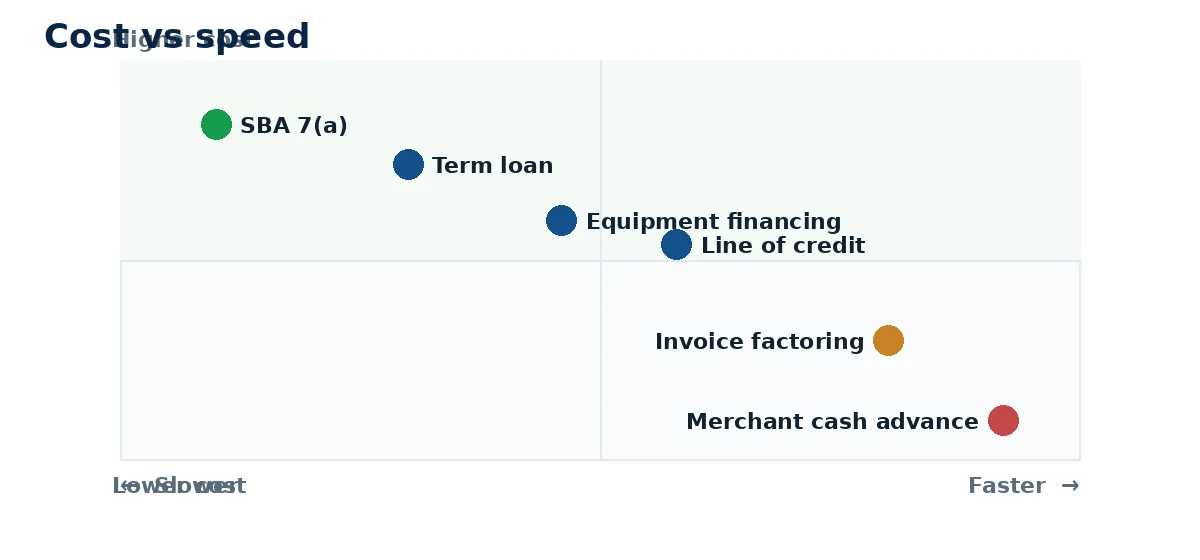
The verdict
If you will keep the asset and want to build equity, buy. If it ages fast or you want minimal cash out of pocket, lease.
Comparison shopping is easier with actual offers. Check what you qualify for in minutes - it won’t affect your credit.