Emergency Services Financing
Financing built for emergency services - where budgets and reimbursements lag real expenses.
See what you qualify for
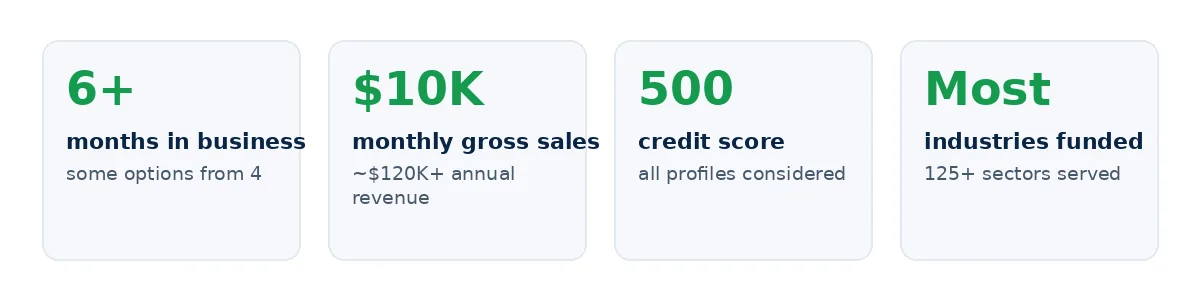
months in business
monthly sales
credit score
- Nonprofits and public-serving organizations face expenses that reimbursements and grants lag.
- A line of credit covers payroll and program costs while reimbursements work through the system.
- Working capital funds a program or equipment need ahead of funding arriving.
- Equipment financing spreads the cost of vehicles, buildings, and systems over their useful life.
- Most financing funds in 1-5 business days, structured around your funding cycle.

Why emergency services businesses need financing
Emergency Services businesses run into a familiar cash-flow problem: budgets and reimbursements lag real expenses. Timing the capital to the cycle is the difference between stalling and scaling.
Because budgets and reimbursements lag real expenses, the constraint is rarely demand - it is the timing gap between money going out and money coming in. Working capital, a line of credit, or equipment financing absorbs that gap so operations keep moving while you grow.
- Covering expenses that reimbursements lag
- Equipment and facility needs
- Staffing through busy cycles
- Funding programs before grant money arrives
Financing options for emergency services
The mix below fits the way emergency services businesses actually operate. Compare as many as you like - checking won’t affect your credit.
Working Capital
Fast, flexible capital to cover cash-flow gaps, seize opportunities, or invest in growth - from $10,000 to $5,000,000.
Business Line of Credit
Revolving capital you draw from when you need it - pay only on what you use. From $10,000 to $5,000,000.
Equipment Financing
Fund the trucks, machinery, and technology your business needs - without draining cash flow. $10,000 to $5,000,000.
How the money fits emergency services cash flow
Organizations serving the public - nonprofits, community programs, educational and civic groups - typically spend on payroll, programs, and facilities before reimbursements or grants arrive. Restricted funding adds complexity: money may be committed on paper long before it reaches the bank.
A line of credit smooths the timing so programs keep running through the gap. Working capital funds a specific program or purchase, and equipment financing covers vehicles, systems, and facility needs over the years they serve.
A nonprofit running a $1.2 million program budget is reimbursed quarterly, but pays staff and vendors monthly - a two-month lag of roughly $200,000. A line of credit covers the gap, repaid as each reimbursement lands.
When the organization adds two vehicles for outreach, equipment financing spreads the cost over five years instead of using program funds that are committed elsewhere.
Cost, speed, and what to have ready
Lines of credit and working capital commonly fund in one to five business days; equipment financing in two to five. Have bank statements, funding or contract documentation, and organizational information ready. Underwriting considers your funding pipeline as well as your operating history.
What you need to qualify
Months in business
Some options from 4 months
Monthly gross sales
~$120K+ annual revenue
Credit score
All credit profiles considered
Frequently asked questions
See what your emergency services business qualifies for
Free, no obligation, and it won't affect your credit.
Get Started →