Masonry Contractor Financing
Financing built for masonry contractor - where progress payments and material costs squeeze cash flow.
See what you qualify for
months in business
monthly sales
credit score
- Construction cash flow is dominated by progress payments, retainage, and materials bought before the first draw.
- Working capital and a line of credit bridge the gap between spending on a job and getting paid for it.
- Equipment financing puts dozers, lifts, and trucks to work without draining cash.
- Retainage held back at completion can leave contractors short for months after a job is done.
- Most construction financing funds in 1-5 business days; specialized asset-backed options can move faster.

Why masonry contractor businesses need financing
Masonry Contractor businesses run into a familiar cash-flow problem: progress payments and material costs squeeze cash flow. Timing the capital to the cycle is the difference between stalling and scaling.
Because progress payments and material costs squeeze cash flow, the constraint is rarely demand - it is the timing gap between money going out and money coming in. Working capital, a line of credit, or equipment financing absorbs that gap so operations keep moving while you grow.
- Materials bought before the first draw is paid
- Payroll while waiting on progress payments
- Renting or financing heavy equipment
- Bridging retainage held back at completion
Financing options for masonry contractor
The mix below fits the way masonry contractor businesses actually operate. Compare as many as you like - checking won’t affect your credit.
Working Capital
Fast, flexible capital to cover cash-flow gaps, seize opportunities, or invest in growth - from $10,000 to $5,000,000.
Equipment Financing
Fund the trucks, machinery, and technology your business needs - without draining cash flow. $10,000 to $5,000,000.
Business Line of Credit
Revolving capital you draw from when you need it - pay only on what you use. From $10,000 to $5,000,000.
How the money fits masonry contractor cash flow
A contractor buys materials, pays crews, and rents equipment weeks before the first progress payment arrives - and often months before retainage is released. That front-loaded cost structure means cash flow, not backlog, is usually the real constraint on how much work a firm can take on.
Financing built for construction is timed to that schedule. A line of credit covers fluctuating job costs and payroll; working capital handles a defined gap on a specific project; equipment financing turns a machine into a monthly payment matched to the years it will work.
Consider a general contractor that lands a $400,000 fit-out paid in progress draws, plus 10% retainage held until completion. Materials and labor for the first month run $70,000 before the first draw lands - and the retainage will not come back for months after the job ends.
A line of credit absorbs the early months of cost, repaid as each draw arrives. Equipment financing covers the lift and the truck, and working capital bridges the retainage gap so the firm can bid the next job while the last one is still closing out.
Cost, speed, and what to have ready
Working capital and lines of credit typically fund in one to three business days; equipment financing in two to five. Have business bank statements, project or asset details, and business information ready. Because equipment and contracts often secure the facility, approval can be easier than for an unsecured loan even with a lean credit profile.
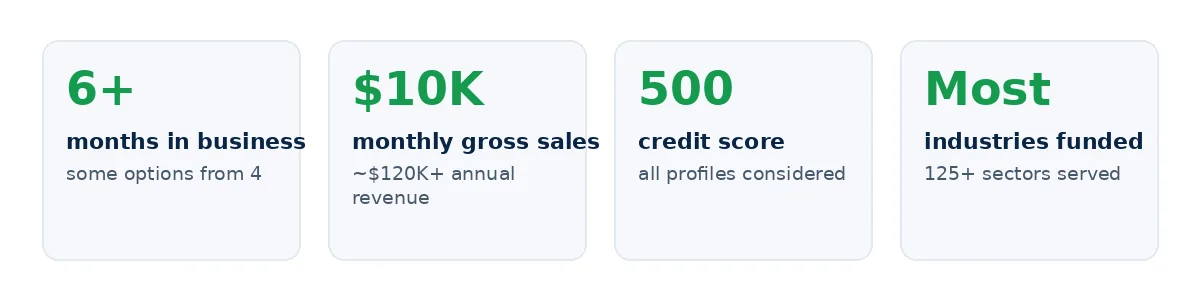
What you need to qualify
Months in business
Some options from 4 months
Monthly gross sales
~$120K+ annual revenue
Credit score
All credit profiles considered
Frequently asked questions
See what your masonry contractor business qualifies for
Free, no obligation, and it won't affect your credit.
Get Started →