Advertising Financing
Financing built for advertising - where projects bill later than you spend.
See what you qualify for
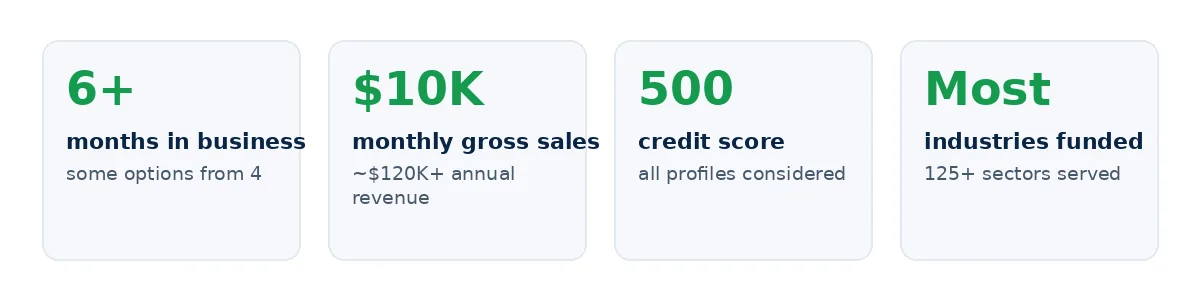
months in business
monthly sales
credit score
- Creative businesses spend on a project long before the client invoice is paid.
- A line of credit covers the gap between project costs and client payment, reusable across jobs.
- Invoice factoring accelerates slow-paying client invoices, underwritten on the client's credit.
- Working capital funds equipment, software, and licensing for a defined need.
- Most creative-sector financing funds in 1-3 business days with light documentation.

Why advertising businesses need financing
Advertising businesses run into a familiar cash-flow problem: projects bill later than you spend. The fix is not more volume - it is capital timed to that gap.
Because projects bill later than you spend, the constraint is rarely demand - it is the timing gap between money going out and money coming in. Working capital, a line of credit, or equipment financing absorbs that gap so operations keep moving while you grow.
- Funding a project before the client pays
- Equipment, software, and licensing
- Covering gaps between invoices
- Scaling to take on bigger clients
Financing options for advertising
The mix below fits the way advertising businesses actually operate. Compare as many as you like - checking won’t affect your credit.
Business Line of Credit
Revolving capital you draw from when you need it - pay only on what you use. From $10,000 to $5,000,000.
Invoice Factoring
Turn unpaid invoices into immediate cash. Funding against invoices aged up to 90 days - $100K+.
Working Capital
Fast, flexible capital to cover cash-flow gaps, seize opportunities, or invest in growth - from $10,000 to $5,000,000.
How the money fits advertising cash flow
A studio or production business fronts the cost of a project - equipment, freelancers, software, travel - then bills a client who may not pay for 60 days. Every new project increases the cash tied up, so growth can feel like it is financed out of your own pocket.
A line of credit is the natural fit: reusable, flexible, and repaid as each client pays. Factoring turns specific invoices into cash sooner using the client's credit, and working capital covers a defined purchase like a camera package or a licensing fee.
A video production company takes on three projects worth $90,000 total, each with $15,000 of up-front production cost. It fronts $45,000 while waiting on clients paying in 60 days - a line of credit covers that, repaid as each invoice clears.
When one client drags to 90 days on a $30,000 invoice, factoring converts it to cash within days, keeping the company's own cash free for the next shoot.
Cost, speed, and what to have ready
Lines of credit and working capital commonly fund in one to three business days; factoring in one to two. Have business bank statements, a project or invoice summary, and business information ready. Factoring focuses on your clients' creditworthiness, which suits newer creative firms.
What you need to qualify
Months in business
Some options from 4 months
Monthly gross sales
~$120K+ annual revenue
Credit score
All credit profiles considered
Frequently asked questions
See what your advertising business qualifies for
Free, no obligation, and it won't affect your credit.
Get Started →